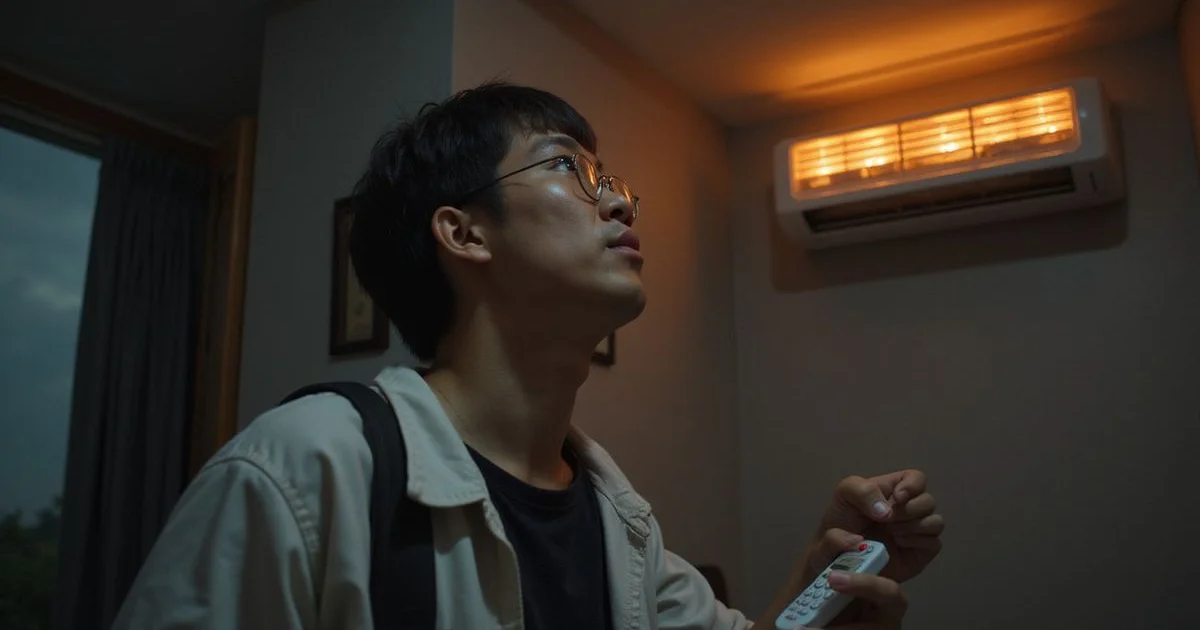
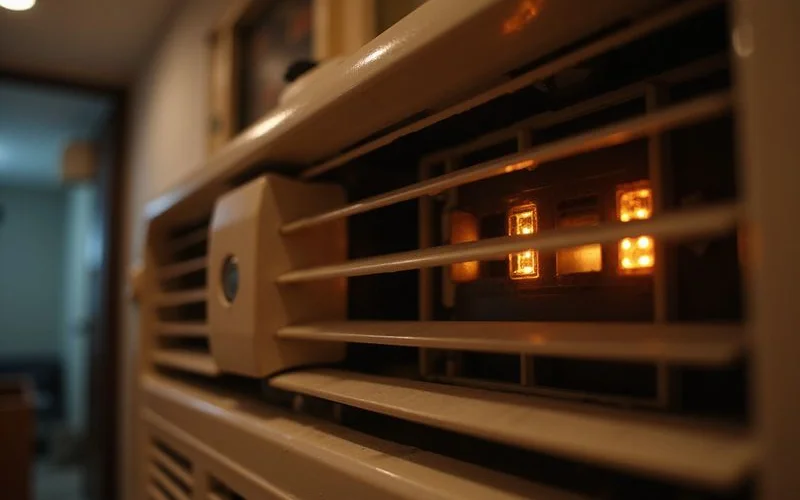
You walk into your room, turn on the aircond, and notice that the indicator lights on the indoor unit are blinking in an unusual pattern. The aircond either does not start, shuts down after a few seconds, or runs but does not cool properly. What is happening?
Those blinking lights are your aircond’s way of telling you something is wrong. Modern air conditioners have built-in self-diagnostic systems that detect problems and communicate them through LED blink patterns or error codes on the display. As a technician, being able to read these codes is one of the first things I do when diagnosing a problem.
In this guide, I will explain the most common blinking light patterns for the popular aircond brands used in Malaysian homes and what each one means.
How Error Codes Work
Most modern aircond units use one of two methods to display error codes:
-
LED blink patterns: The operation light, timer light, or other indicator LEDs blink a specific number of times in a repeating pattern. For example, 3 blinks, pause, 3 blinks, pause. The number of blinks indicates the error type.
-
Alphanumeric display: Some units show an error code like “E1,” “F3,” or “U4” on the built-in display or remote control screen.
Understanding these codes does not mean you can fix the problem yourself. Many issues require professional tools and expertise. But knowing what the code means helps you communicate the problem to your technician and gives you a rough idea of the severity and potential cost.
Daikin Error Codes
Daikin is one of the most popular aircond brands in Malaysia. Their units typically display error codes on the indoor unit display or through LED blink patterns.
| Error Code | Meaning | Severity |
|---|---|---|
| E0 | Safety device activated | Medium - check for short circuit |
| E1 | PCB (control board) error | High - likely needs board replacement |
| E3 | High pressure protection | Medium - dirty condenser or overcharge |
| E5 | Compressor overload | High - compressor stress |
| E7 | Fan motor fault | Medium - motor or capacitor issue |
| F3 | Discharge pipe temperature too high | Medium - low gas or dirty coil |
| F6 | High pressure sensor abnormal | Medium - sensor or refrigerant issue |
| U0 | Low refrigerant detected | Medium - gas leak suspected |
| U4 | Communication error (indoor-outdoor) | Medium - wiring issue |
The most common Daikin error we see in PJ: U4 (communication error). This is often caused by a loose wire connection between the indoor and outdoor units, which can happen after heavy rain or rodent activity near the cables.
Panasonic Error Codes
Panasonic airconds are also widely used in Malaysian homes. They typically display errors through LED blink patterns on the indoor unit.
| Error Code / Blinks | Meaning | Severity |
|---|---|---|
| H00 | No fault detected | Normal |
| H11 | Indoor-outdoor communication error | Medium |
| H14 | Indoor air sensor fault | Low - sensor replacement |
| H15 | Compressor temperature sensor fault | Medium |
| H16 | Outdoor current sensor fault | Medium |
| H19 | Indoor fan motor locked | Medium |
| H27 | Outdoor air sensor fault | Low |
| F11 | Reversing valve fault | High |
| F90 | PFC circuit fault | High |
| F91 | Refrigerant cycle fault | High - possible leak |
Common Panasonic issue in Malaysian homes: H11 (communication error), often caused by a tripped outdoor unit circuit breaker or a damaged connecting cable.
Midea and Haier Error Codes
These brands are popular in Malaysia for their affordability. Their error code systems are simpler but still useful for diagnosis.
Midea Common Errors
| Error Code | Meaning |
|---|---|
| E1 | Indoor temperature sensor open/short |
| E2 | Evaporator temperature sensor fault |
| E3 | Outdoor temperature sensor fault |
| E4 | System error / high pressure |
| E5 | Overcurrent protection |
| E6 | Communication error |
| P1 | High/low voltage protection |
Haier Common Errors
| Error Code | Meaning |
|---|---|
| E1 | Room temperature sensor fault |
| E2 | Evaporator temperature sensor fault |
| E5 | Outdoor unit communication fault |
| E6 | Outdoor unit EEPROM error |
| E7 | Outdoor unit temperature sensor fault |
| F1 | Evaporator sensor open circuit |
| F2 | Condenser sensor fault |
Samsung and LG Error Codes
Samsung Common Errors
| Error Code | Meaning |
|---|---|
| E101 | Communication error |
| E121 | Indoor temperature sensor fault |
| E154 | Indoor fan fault |
| E201 | Outdoor temperature sensor fault |
| E251 | Compressor overcurrent |
| E416 | Overheating protection |
LG Common Errors
| Error Code | Meaning |
|---|---|
| CH01 | Indoor pipe sensor short/open |
| CH02 | Indoor room sensor fault |
| CH05 | Communication error |
| CH10 | Indoor fan motor fault |
| CH21 | Outdoor DC peak value error |
| CH38 | Outdoor temperature sensor fault |
What the Blinking Patterns Mean in General
If your aircond does not display alphanumeric codes and instead uses blinking lights, here is a general guide:
| Pattern | Typical Meaning |
|---|---|
| Steady on (no blink) | Normal operation |
| Slow blink (every 3-5 seconds) | Standby or timer mode |
| Fast continuous blink | Error detected - count the blinks |
| Operation + timer lights blinking together | Communication error |
| All lights blinking simultaneously | Major fault or power issue |
| Alternating blink pattern | Specific component fault |
To read the code: Watch the blinking pattern carefully. Count the number of blinks before the pause. For example, if the operation light blinks 5 times, pauses for 2 seconds, then blinks 5 times again, the error code is likely 5.
What You Can Do Before Calling a Technician
Some error codes can be resolved with simple steps:
Power Reset
Turn off the aircond at the circuit breaker (not just the remote), wait 30 seconds, and turn it back on. This clears temporary errors caused by power surges or brief electrical fluctuations, which are common in parts of Petaling Jaya during thunderstorms.
Check the Outdoor Unit
Go outside and verify that the outdoor unit has power (is the fan spinning?), is not obstructed by objects or vegetation, and has no visible ice buildup on the pipes.
Clean the Filters
A severely clogged filter can trigger temperature sensor errors or overload protection codes. Remove and clean the filters, then restart the unit.
Check for Water Leaks
If you see a drainage-related error, check if the drainage pipe is blocked. Sometimes a simple blockage triggers a safety shutdown.
When You Definitely Need a Technician
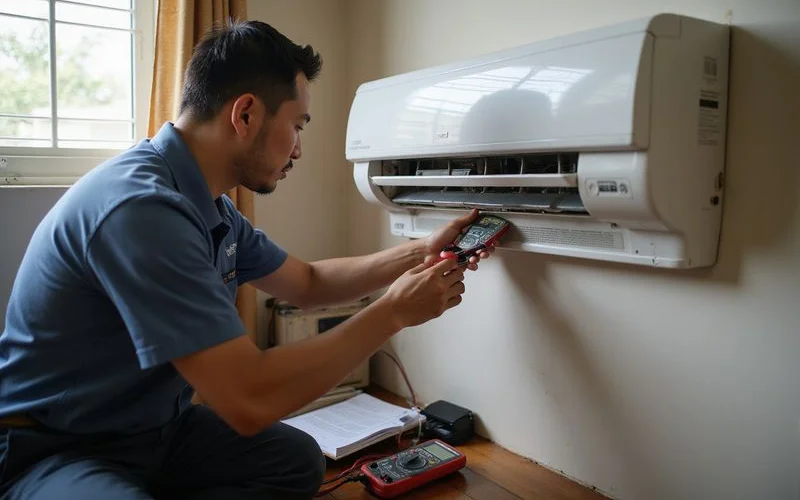
Call a professional for these situations:
- Compressor-related errors (E5, overcurrent, overload): These indicate serious issues with the most expensive component in your aircond
- Communication errors that persist after power reset: The wiring between indoor and outdoor units may need repair
- Refrigerant cycle errors: These suggest gas leaks that require proper leak detection and repair
- PCB or control board errors: The electronic brain of the aircond needs professional diagnosis and possible replacement
- Repeated error codes after reset: A code that keeps coming back indicates an underlying problem that will not resolve on its own
Recording Error Information for Your Technician
When you call for service, having the following information ready will help the technician prepare the right tools and parts:
- Brand and model number of your aircond (printed on a sticker on the indoor unit)
- The exact error code or blink pattern you observed
- When the error started (after a storm, after a power outage, gradually, etc.)
- Any unusual symptoms before the error appeared (strange noises, weak cooling, water leaking)
- Whether you attempted a power reset and what happened
This information helps us diagnose the problem faster, which means less time troubleshooting and lower service costs for you. At PJ Kool Aircond Service, our technicians are trained on all major brands sold in Malaysia, so we can quickly identify error codes and recommend the most cost-effective repair.
Don’t ignore a blinking light. Our aircond repair and diagnostics service can identify and fix most error codes in a single visit — RM 50 diagnostic fee waived on repair.