Your air conditioner relies on refrigerant gas to absorb heat from the indoor air and release it outdoors. When the refrigerant level drops below the manufacturer’s specification, your aircond cannot cool effectively, and it starts working much harder to achieve the same result. Left unchecked, low refrigerant can lead to compressor damage — the most expensive component in your aircond system, often costing RM 1,500 to RM 3,000 to replace.
The tricky part is that refrigerant does not get “used up” like petrol in a car. In a properly sealed system, the same gas circulates indefinitely. If your aircond is low on gas, it means there is a leak somewhere, even if it is a very slow one. Recognising the signs early can save you from an uncomfortable night, an inflated electricity bill, and an expensive repair.
Here are the five most reliable signs that your aircond needs a refrigerant gas top-up, based on our experience servicing thousands of units across Petaling Jaya and the Klang Valley.
1. Your Aircond Is Running But Not Cooling the Room
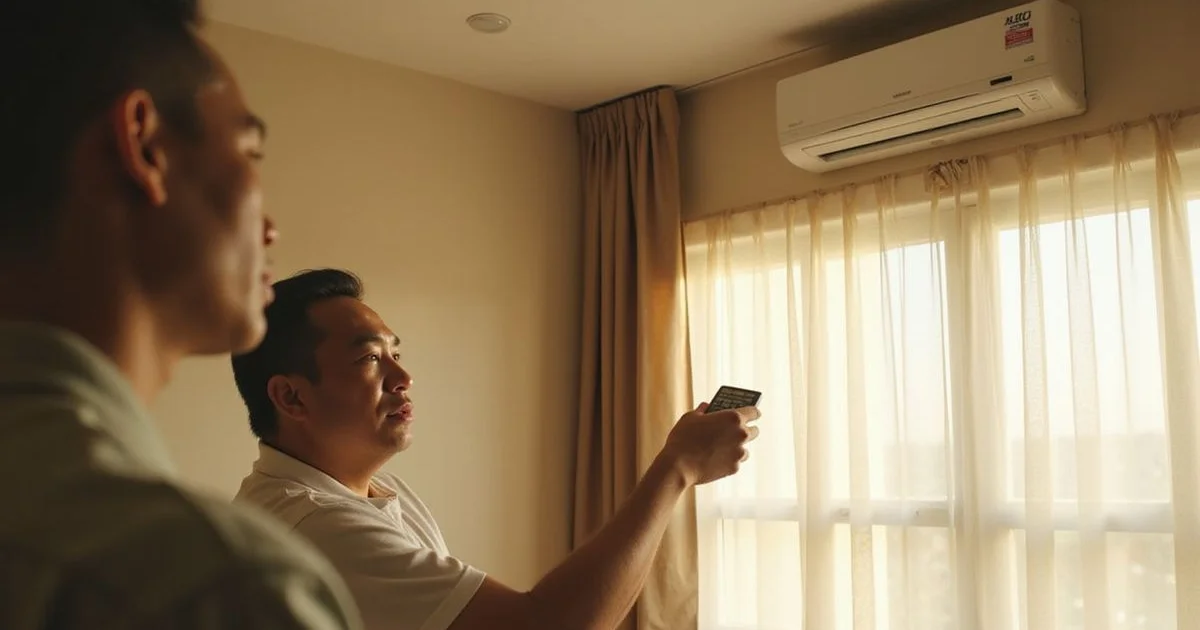
This is the most obvious sign and the one that prompts most calls to our service line. Your aircond turns on normally, the fan is running, and air is blowing from the indoor unit, but the room just does not get cold. You keep lowering the temperature setting on the remote, but nothing changes.
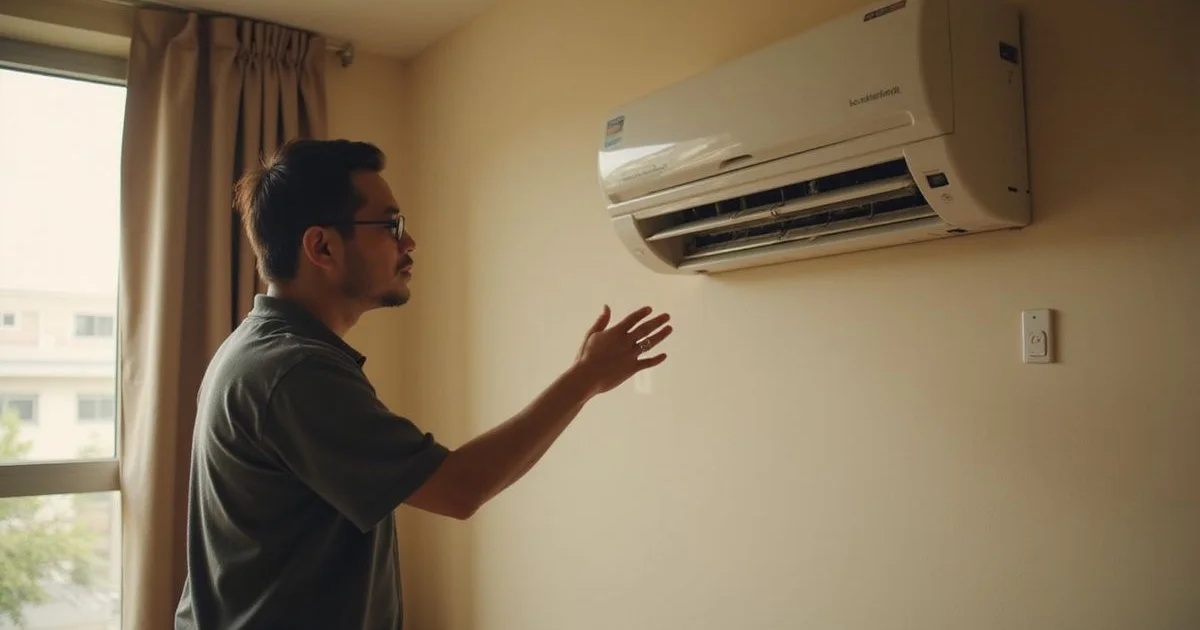
How to check: Stand directly under the indoor unit and hold your hand near the air outlet. If the air feels lukewarm or only slightly cool rather than distinctly cold, low refrigerant is a likely cause.
Important distinction: If no air is blowing at all, the issue is probably electrical (a failed fan motor or control board), not low gas. If air is blowing strongly but not cold, gas is the primary suspect — though dirty coils can cause similar symptoms. A proper diagnosis by a technician will confirm which it is.
In Malaysia’s tropical climate where daytime temperatures regularly exceed 32 degrees Celsius, even a small drop in refrigerant level makes a noticeable difference in cooling performance. Your aircond is designed to operate with a precise amount of gas, and even 10 to 15 percent less than the specified charge reduces cooling output significantly.
2. Ice Formation on the Evaporator Coil or Copper Pipes
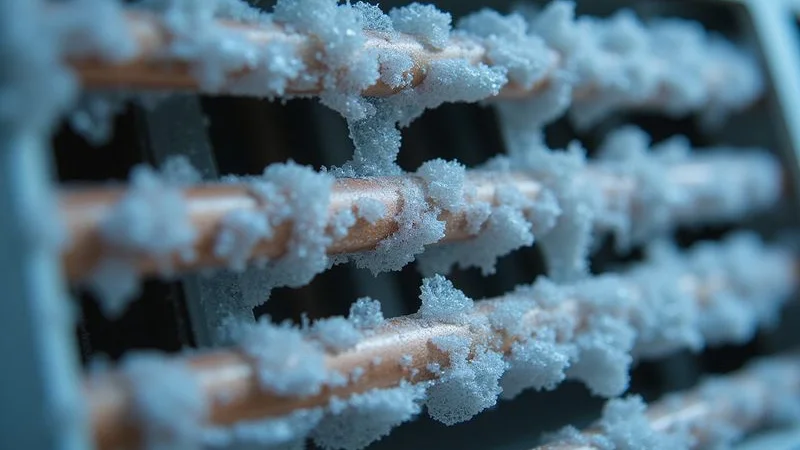
If you notice ice or frost forming on the copper pipes running from your indoor unit to the outdoor unit, or on the evaporator coil behind the front panel of the indoor unit, this is a strong indicator of low refrigerant.
Why ice forms: When refrigerant is low, the reduced pressure causes the remaining gas to expand more than normal as it passes through the evaporator coil. This extra expansion drops the coil temperature below freezing point, and the moisture in the air condenses and freezes on the coil surface.
How to check: Turn off your aircond and open the front panel of the indoor unit. If you see a layer of ice or heavy frost on the coil (the aluminium fins behind the filter), low gas is almost certainly the cause. You may also notice ice forming on the thicker copper pipe (the suction line) that connects to the outdoor unit.
What to do immediately: Turn off the aircond and let the ice melt completely before running it again. Operating with a frozen coil can damage the compressor because liquid refrigerant may flow back to the compressor instead of gas, a condition called “liquid slugging” that can destroy the compressor valves.
3. Higher Than Normal Electricity Bills
Low refrigerant forces your aircond to run for longer periods to achieve the set temperature — or it may never reach the set temperature at all. This means the compressor runs almost continuously, consuming more electricity than a properly charged system.
How to check: Compare your current TNB electricity bill with the same month in previous years. If your usage has spiked without any change in your aircond usage habits (same hours, same temperature setting, same number of units running), low gas could be contributing to the increase.
In our experience servicing homes across PJ, a system running 20 to 30 percent low on refrigerant can increase that unit’s electricity consumption by 15 to 25 percent. For a household running two or three airconds nightly, this can translate to an extra RM 50 to RM 100 per month on your electricity bill.
Of course, higher bills can also result from dirty filters, clogged coils, or a malfunctioning thermostat. But if you have been maintaining your filters and the bills still seem high, low gas is worth investigating.
4. The Aircond Takes Much Longer Than Usual to Cool the Room
A properly charged aircond in good condition should bring a typical Malaysian bedroom (100 to 150 square feet) to a comfortable temperature within 15 to 20 minutes. If you notice that your room takes 30, 40, or even 60 minutes to feel cool, and you have not changed the temperature setting or room conditions, the cooling capacity has likely dropped due to low refrigerant.
How to check: Set your aircond to 23 degrees Celsius and time how long it takes for the room to feel noticeably cooler. If it used to take 15 minutes and now takes 40 minutes, something has changed. After ruling out dirty filters (which you can check yourself), low gas is the next most common cause.
This symptom is especially noticeable during the hottest months in Malaysia (March to May), when the heat load on your aircond is at its peak. A system that was borderline low on gas might have performed adequately during cooler months but struggles when temperatures soar.
5. Hissing or Bubbling Sounds from the Indoor Unit
If you hear a faint hissing or bubbling sound coming from your aircond’s indoor unit during operation, this can indicate a refrigerant leak. The hissing sound is gas escaping through a crack or hole in the evaporator coil or piping, while a bubbling sound may indicate that the refrigerant level is so low that the system is drawing in air along with the remaining gas.
How to check: Turn off the television and any other noise sources, then stand close to the indoor unit and listen carefully. Normal aircond sounds include the steady hum of the fan and the occasional click of the thermostat relay. Hissing, bubbling, or gurgling sounds that were not present before are abnormal.
Important note: A brief gurgling or hissing sound when the aircond first starts up or shuts down can be normal as the refrigerant changes state. The concern is when these sounds are continuous or occur during steady operation.
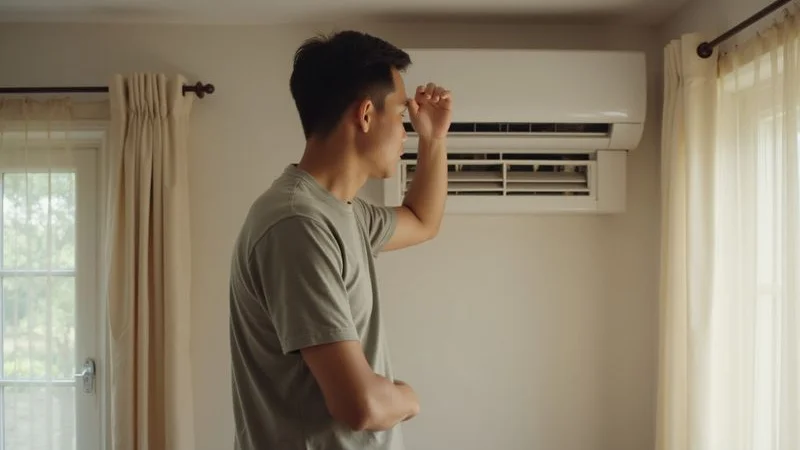
What To Do If You Notice These Signs
If you observe one or more of these signs, here is our recommended course of action:
Step 1: Check and clean your air filters first. Dirty filters can mimic some of the symptoms of low gas (reduced cooling, longer cool-down time, higher bills). If cleaning the filters resolves the issue, great — no technician needed.
Step 2: If the problem persists after cleaning filters, call a qualified technician. At PJ Kool Aircond Service, we will check your refrigerant pressure, identify the cause of any gas loss, and advise on whether a top-up or leak repair is needed.
Step 3: If a top-up is sufficient, the technician will add the appropriate type and amount of refrigerant (R22, R410A, or R32 depending on your system).
Step 4: If there is an active leak, the technician should locate and repair it before recharging the system. Topping up gas without fixing a leak is a temporary solution that wastes money.
How Often Should Gas Top-Up Be Needed?
A healthy aircond system with no leaks should not need a gas top-up for its entire lifespan. If your technician tells you that gas needs topping up every year, your system has a leak that should be investigated and repaired.
That said, very slow leaks (sometimes called “micro leaks”) at pipe joints are common, especially in older systems. These may only require a top-up every two to three years, and the cost of repair may not justify the expense compared to periodic topping up. Your technician can advise on the most cost-effective approach based on your specific situation.
If you are in Petaling Jaya or the Klang Valley area and suspect your aircond is low on gas, contact PJ Kool Aircond Service for a professional diagnosis. We include gas top-up free with every chemical wash service, so you can address both cleanliness and gas levels in a single visit.
Address gas issues and dirty coils in one visit: Our aircond chemical wash service includes FREE gas top-up. Or if you need a standalone repair, see our aircond repair service for leak detection and gas refill.