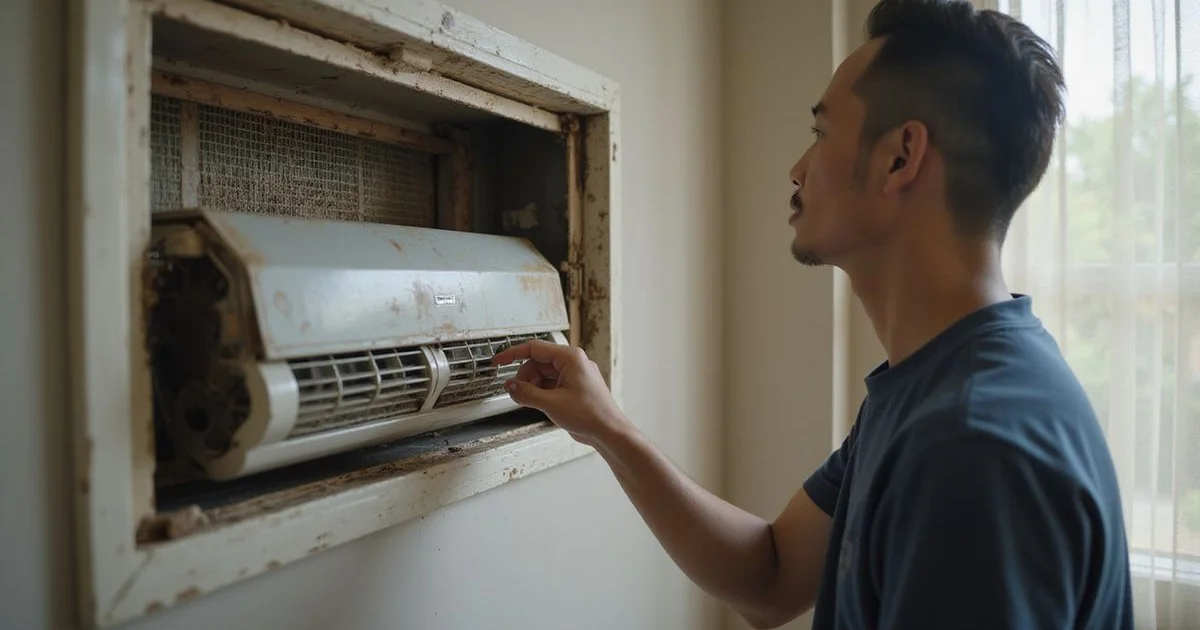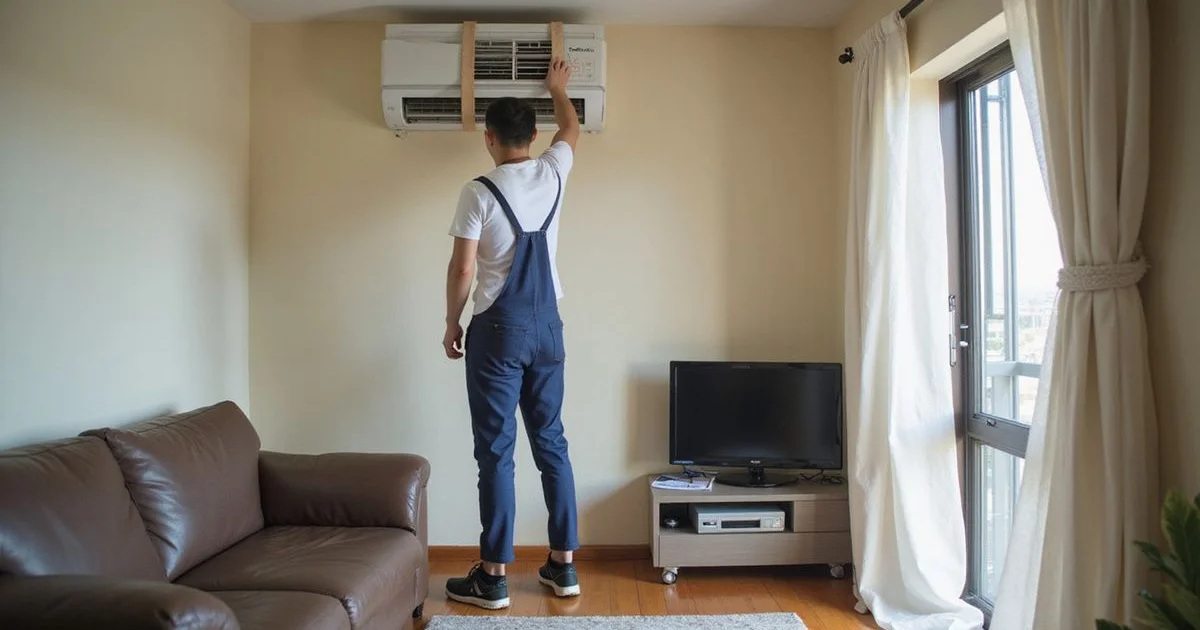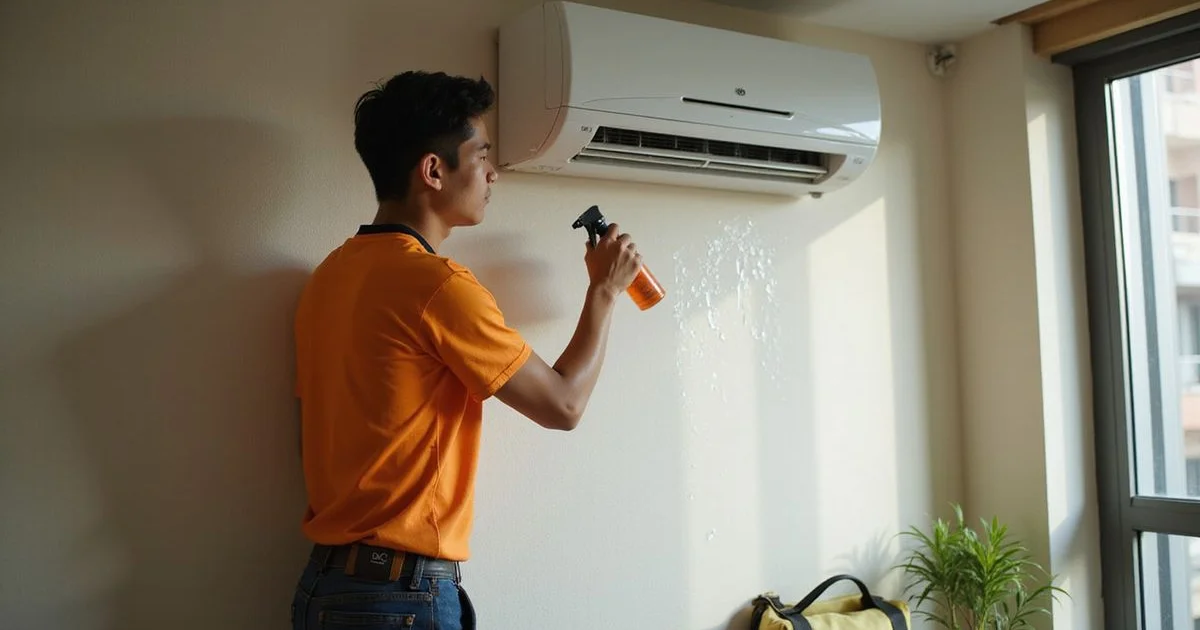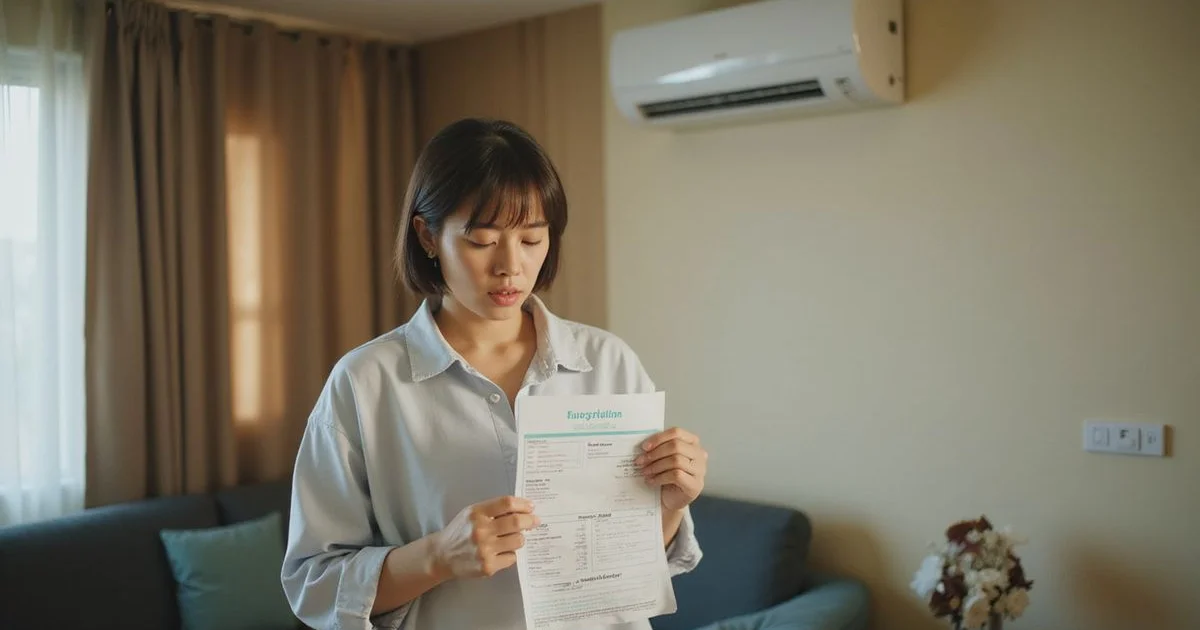
Every Malaysian homeowner dreads opening their TNB electricity bill, especially during the hot months when the aircond runs for hours every night. But here is something most people do not realise: a dirty aircond can increase your electricity consumption by 15 to 40 percent compared to a clean, well-maintained unit. Over a year, that translates to hundreds of ringgit in wasted energy — money that could have been saved with regular maintenance.
At PJ Kool Aircond Service, we have measured the before-and-after performance of hundreds of aircond units during chemical wash services across Petaling Jaya, Subang Jaya, and the Klang Valley. The results consistently show a significant improvement in energy efficiency after cleaning. This article explains exactly how dirt affects your aircond’s electricity consumption and what you can do about it.
How Dirt Impacts Aircond Efficiency
To understand why a dirty aircond uses more electricity, you need to understand the basic cooling cycle. Your aircond works by passing warm indoor air over the evaporator coil (inside the indoor unit), which contains cold refrigerant. The refrigerant absorbs the heat, and the cooled air is blown back into your room. The absorbed heat is then released outside through the condenser coil (in the outdoor unit).
When any part of this system is coated with dirt, dust, or grime, the heat transfer process becomes less efficient. The aircond has to work harder and run longer to achieve the same cooling effect, consuming more electricity in the process.
Dirty Filters: The First Layer of Waste
Air filters are the first component to get dirty, and the easiest to clean. When filters are clogged with dust:
- Airflow drops by 20 to 50 percent. The fan motor has to work harder to pull air through the blocked filter, using more electricity.
- The evaporator coil receives less air. With reduced airflow, the coil cannot absorb heat efficiently, so the compressor runs longer to compensate.
- Temperature sensors read inaccurately. When airflow is restricted, the return air temperature sensor may detect warmer air than the actual room temperature, causing the system to continue running when it should cycle off.
Energy impact: Industry studies show that dirty filters alone can increase aircond energy consumption by 5 to 15 percent. In a Malaysian household running a 1.5 HP unit for 8 hours daily, that is an extra RM 15 to RM 40 per month per unit.
Dirty Evaporator Coil: The Hidden Efficiency Killer
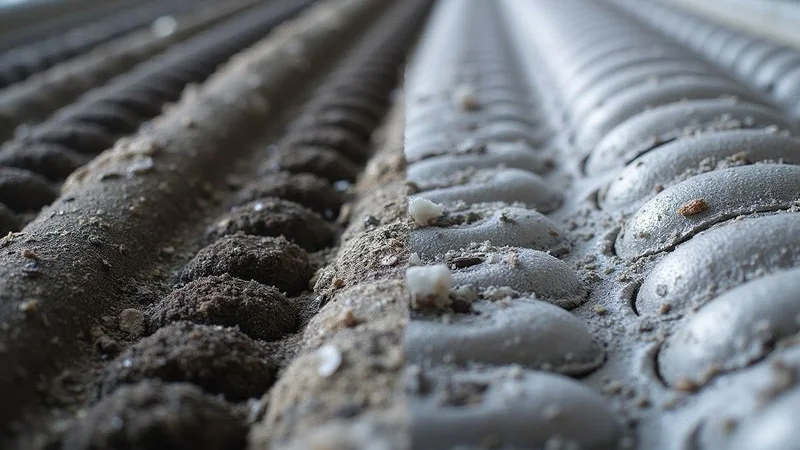
Even if you clean your filters regularly, fine dust particles eventually pass through and accumulate on the evaporator coil. Over 6 to 12 months without a chemical wash, a thick layer of dust and biofilm coats the coil fins, acting as insulation that prevents efficient heat transfer.
Energy impact: A dirty evaporator coil can reduce heat absorption efficiency by 20 to 40 percent. The compressor compensates by running for longer periods, sometimes running almost continuously without reaching the set temperature. This is where the real electricity waste occurs.
We have measured temperature differentials (the difference between the air entering and leaving the indoor unit) before and after chemical washing. A clean system typically achieves a 8 to 12 degree Celsius differential. Dirty systems we have serviced in PJ often showed only 4 to 6 degrees — meaning the aircond was doing half the work at full electricity cost.
Dirty Condenser Coil (Outdoor Unit): The Forgotten Component
The outdoor unit gets even less attention than the indoor unit, yet it has a massive impact on efficiency. The condenser coil releases absorbed heat into the outside air. When it is covered in dust, leaves, cobwebs, or grime, heat cannot escape efficiently.
Energy impact: A dirty condenser coil can increase compressor energy consumption by 10 to 30 percent. The compressor has to generate higher pressure to force heat out through the insulating layer of dirt, which means more electricity and more mechanical stress.
In Malaysian condos and apartments where outdoor units are installed in tight balcony alcoves with limited airflow, this problem is even worse. Add a layer of dirt on top of restricted airflow, and the compressor is working extremely hard.
Real Numbers: How Much Extra Are You Paying?
Let us calculate a realistic scenario for a typical Malaysian household in Petaling Jaya:
Household setup:
- 3 aircond units (1.5 HP each, inverter type)
- Running 8 hours per night (10pm to 6am)
- TNB tariff: approximately RM 0.57 per kWh (for usage above 600 kWh)
Clean system consumption:
- 1.5 HP inverter at steady state: approximately 0.7 kW average
- Monthly per unit: 0.7 kW x 8 hours x 30 days = 168 kWh
- Monthly cost per unit: 168 x RM 0.57 = RM 95.76
- Total for 3 units: RM 287.28
Dirty system consumption (25 percent increase):
- Average draw increases to approximately 0.875 kW
- Monthly per unit: 0.875 x 8 x 30 = 210 kWh
- Monthly cost per unit: 210 x RM 0.57 = RM 119.70
- Total for 3 units: RM 359.10
Monthly waste: RM 71.82 Annual waste: RM 861.84
That is nearly RM 900 per year in wasted electricity, just because the aircond systems are dirty. The cost of a chemical wash for all three units (approximately RM 240 to RM 360 total) pays for itself in three to four months through electricity savings alone.
The Compounding Effect in Malaysia’s Climate
Malaysia’s tropical climate makes dirty airconds even more wasteful than in temperate countries. Here is why:
Higher ambient temperatures. With outdoor temperatures of 32 to 36 degrees Celsius for most of the year, your aircond is already working hard. A dirty system in this climate suffers more than the same dirty system in a cooler country because the temperature gap between indoor and outdoor is larger.
Higher humidity. Malaysia’s humidity (often 70 to 90 percent) means your aircond is also working to dehumidify the air, not just cool it. A dirty evaporator coil is less effective at dehumidification, leading to a clammy feeling even when the temperature seems right. Many people respond by lowering the set temperature further, using even more electricity.
Year-round usage. Unlike countries with distinct seasons where airconds rest for half the year, Malaysian airconds run 12 months a year. Dirt accumulation is continuous, and the efficiency loss compounds over time.
What Regular Maintenance Saves You
Based on our service data from the Klang Valley, here is what regular maintenance looks like in terms of savings:
Filter cleaning every 2 weeks:
- Cost: Free (DIY)
- Savings: 5 to 15 percent electricity reduction
- Time: 5 minutes per unit
Chemical wash every 6 months:
- Cost: RM 80 to RM 120 per unit
- Savings: 15 to 30 percent electricity reduction
- Includes: Gas check and top-up, drain line clearing
Annual condenser coil cleaning:
- Cost: RM 50 to RM 80 per unit
- Savings: 10 to 20 percent additional efficiency gain
Simple Steps You Can Take Today
Step 1: Clean your filters this weekend. Remove the front panel of each indoor unit, slide out the filters, rinse them under running water, let them dry, and reinstall. This alone will improve efficiency immediately.
Step 2: Schedule a chemical wash if it has been more than 6 months. A professional chemical wash addresses the coil and drain pan that you cannot clean yourself.
Step 3: Check your outdoor unit. Make sure it is not obstructed by furniture, boxes, or accumulated debris. Clear at least 30 centimetres of space around it for proper airflow.
Step 4: Set your thermostat to 24 to 25 degrees Celsius. Each degree below 24 adds approximately 6 to 8 percent to your electricity usage. Combined with a clean system, this temperature range provides comfortable cooling at minimum cost.
The bottom line is clear: a dirty aircond is an expensive aircond. Regular maintenance is not just about comfort — it is about keeping your TNB bill under control. If you are in Petaling Jaya or the Klang Valley and your aircond has not been serviced recently, contact PJ Kool Aircond Service for a chemical wash that will start saving you money from day one.
Lower your electricity bill today: Book our aircond chemical wash service — a thorough deep clean that restores cooling efficiency and reduces energy waste.